For hotels
How to measure the ROI of digital guest service in a hotel
A QR code and another dashboard do not create savings by themselves. Value begins when they eliminate unnecessary handoffs, missed requests and repeated work.
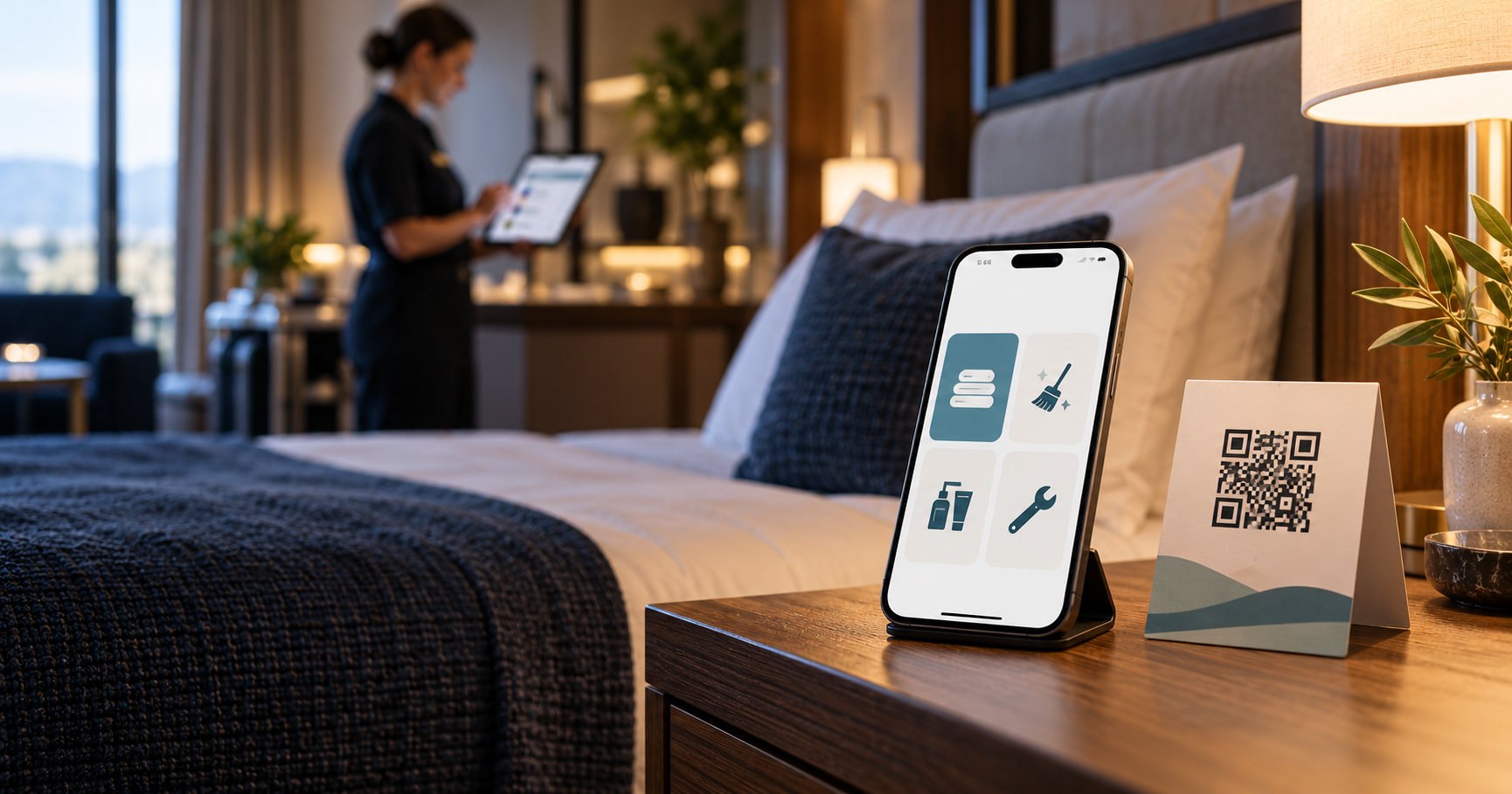
Hotels considering digital guest service often hear promises of fewer calls and happier guests. But the number of QR scans does not tell an owner whether another monthly subscription is worthwhile.
For an independent hotel, the better question is simple: how much work does it take to receive, hand over and close an everyday request today — and what actually changes after introducing a new process?
1. Measure the operation, not the clicks
For seven to fourteen days, record ordinary requests on one or two shifts: towels, changes to room cleaning, extra amenities and maintenance issues. You only need the request type, time received, channel, manual handoffs and whether completion was recorded.
A one-minute phone call is not always one minute of work. Reception may still need to find a colleague, pass on details, verify the room and check the result later. Those small steps belong in your baseline.
Avoid collecting guest names or personal details that are unnecessary for this analysis. The pilot is about the process, not gathering more personal data.
2. Five measures a hotel manager can actually use
Request volume: how many relevant requests arrive each day, and through which channels? If the total is only a few per week, a new system may cost more than it saves.
Manual handoff time: minutes spent receiving, rewriting, calling colleagues and tracking down an outcome. Time a small sample instead of guessing.
Completion rate: the proportion of requests with a recorded outcome, compared with requests that remain open or lack clear ownership. More recorded requests do not necessarily mean better service.
Repeated contact and rework: how often a guest calls again, staff need to confirm a room number or a handoff must be corrected.
Additional work: time spent checking a new dashboard, training, maintaining information and running duplicate records. Deduct this from any benefit.
3. Worked example: what two minutes per request mean
Imagine a hotel processing 18 suitable service requests per day. Assume the new process genuinely removes two minutes of manual handoff per request. Over 30 days, that is 18 staff hours: 18 × 2 × 30 ÷ 60.
At an illustrative fully loaded labour cost of CZK 250 per hour, that capacity is worth CZK 4,500 per month. If monitoring the new dashboard requires another eight hours, the net capacity becomes ten hours — CZK 2,500 in this example.
That does not automatically mean a CZK 2,500 reduction in payroll. The team may gain time for guests, but cash savings occur only if work, overtime or another expense is actually reduced. The subscription, setup and equipment costs must also be included.
These numbers illustrate a calculation. They are not measured hotel results or guaranteed savings from Pikolee.
4. Compare like-for-like operations during a pilot
First establish the baseline. Then choose a limited set of rooms and two to four frequent request types. Make sure each shift knows who monitors the digital channel and who records the result.
Compare similar weekdays and occupancy levels. A quiet Monday cannot be meaningfully compared with a fully booked weekend without context. Count relevant requests across every channel — including those guests still make by phone.
Ask the staff which old step the new process replaced. If reception must copy every digital request into another tool manually, the pilot has simply added another channel.
5. When a new system is the wrong investment
If the hotel has very few service requests, already has a reliable workflow or cannot staff another inbox, changing shift handovers may be a better first move than buying software.
Digital self-service also cannot replace an urgent call, fix understaffing or guarantee delivery times. Those remain operational responsibilities.
Decide on the subscription using evidence
At the end of a pilot, an owner should know the request volume, the change in real staff minutes, the proportion of completed cases, repeated contacts and additional team workload. Only then is it useful to compare the service price with the value created.
Pikolee aims to shorten the path from a guest request to actionable work for hotel staff. Whether that is financially worthwhile in your hotel should be demonstrated in daily operations, not inferred from marketing claims.