For hotels
Why hotels don’t need another app — they need one layer for every guest request
A hotel can already have WhatsApp, reception, a PMS, QR codes and several other systems. The real problem begins when every channel creates its own information flow and staff have to reconnect it by hand.
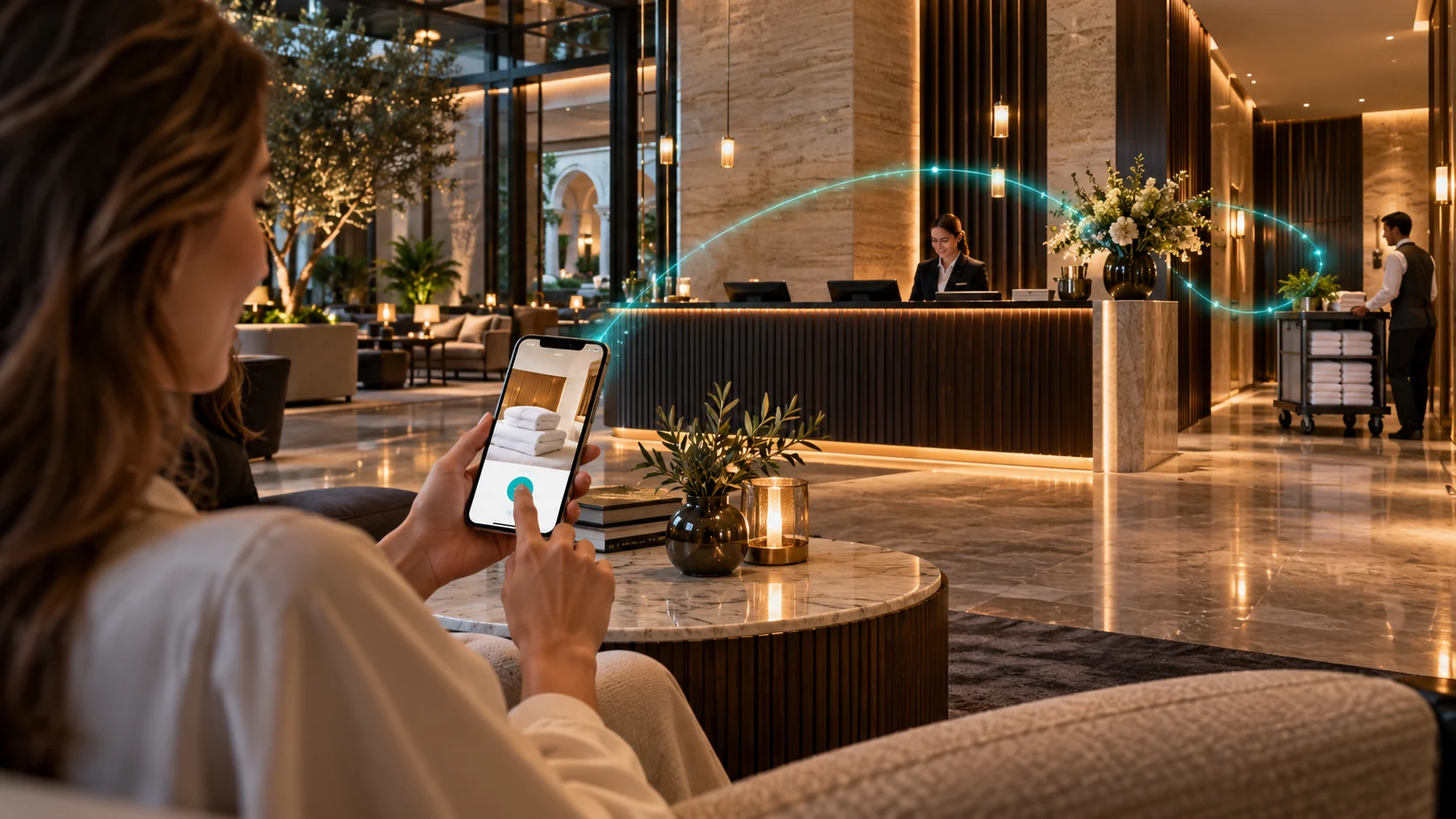
A hotel can have a PMS, WhatsApp, email, a reception phone, QR codes, internal chat and several operational systems. Yet a simple guest request can still end up on a piece of paper, in a private message or only in the memory of the person who received it.
The problem is often not a lack of technology. The problem is that guest requests arrive through different channels and the hotel has to consolidate them manually.
A stronger solution does not have to be another isolated app. It can be one intake layer between the guest and hotel operations.
One request, several different paths
Imagine a simple situation. A guest in room 214 needs fresh towels. They can call reception, walk to the front desk, open the hotel website, scan a QR code, send a message or use a digital assistant.
From the guest’s perspective, these are different communication methods. From the hotel’s perspective, it is still the same operational task:
Room 214 → deliver fresh towels.
The hotel does not need a different workflow for every channel. It needs those different inputs to create one structured request.
More communication channels do not automatically mean less chaos
Hotel digitalisation often adds another channel. Phone is joined by chat, chat by an app, the app by WhatsApp, and WhatsApp by a chatbot. Guests get more options, but staff can also end up with more places to monitor.
If information does not flow between systems automatically, reception still has to read the message, understand it, identify the room, route it to the right team and later check whether the task was completed.
Technology may digitise guest communication without removing manual handoffs behind the front desk.
The real problem is not the message. It is the journey through the hotel.
A guest is not merely sending a message. They are creating a task. That task can be represented in a structure hotel operations can work with:
- Room: 214
- Request: fresh towels
- Time: 17:42
- Department: housekeeping
- Priority: standard
- Status: new
- Owner: a specific team or employee
Once a request is captured in this form, its source matters much less. QR, reception, messaging or AI can simply be different doors into the same process.
Many inputs, one operational request
The architecture can be surprisingly simple. At the top are the inputs used by guests or staff. In the middle is one shared request record. At the bottom are the systems and teams where the hotel actually works.
Inputs can include QR / NFC, web, reception, messaging, AI or voice, and PMS / API.
Pikolee can turn them into one request with a shared status, owner and history. Depending on the integration, that request can then be handled in Pikolee itself or routed into tools such as hotelkit, Unifocus, a PMS, Microsoft Teams, Aleno or another internal workflow.
One request · one record · one operational flow.
The hotel already has a PMS. That is not a problem.
A logical objection is: “We already have a PMS. Why would we need another system?” The answer is that a PMS and guest communication do not necessarily solve the same part of hotel operations.
A PMS may manage reservations, stays, rooms, billing and guest profiles very well. That does not automatically mean a guest can easily request amenities, fresh towels, late check-out, wellness, a transfer or report a technical problem — and that the request reaches the right employee without manual re-entry.
Pikolee therefore does not have to replace the PMS. It can work with it.
What about hotelkit, Unifocus or Microsoft Teams?
The same principle applies to operational systems. If a hotel already uses an internal tool for communication and task management, forcing the whole team to abandon that workflow just because a new guest channel has been added would create resistance rather than value.
A stronger model is:
The guest submits a request → Pikolee structures it → the request reaches the system where the hotel team already works.
For one hotel, that may be the Pikolee dashboard. For another, it may be hotelkit, a PMS or Teams. The result does not have to be another isolated system beside the others. It can be a connecting layer.
A QR code is only one input
QR is highly practical for an MVP because guests do not need to install anything. They simply open a mobile web experience. But the QR code is not the product itself.
The same type of request can later start from the hotel website, NFC, reception, messaging, voice or another hotel-system integration. Guests can use the channel that suits them while the hotel still receives one consistent workflow.
The guest does not want to understand the hotel’s IT architecture
Guests do not care whether the hotel uses Mews, Opera, hotelkit, Teams, Unifocus or an internal system. They want two towels, a wellness booking or a problem fixed.
Good technology hides this complexity. The guest sees a simple service, Pikolee sees a structured request and the hotel team receives a task in the environment it already uses.
Manual re-entry costs more than it looks
Every manually forwarded request contains several small steps: receive it, understand it, identify the room, choose the responsible department, hand it over and potentially verify completion.
One request takes only a moment. Dozens per day create meaningful operational load, and every manual handoff increases the risk of delay, loss, misrouting or an open request that nobody closes.
One request record creates another asset: data
Once requests stop living as isolated calls and messages, the hotel can start seeing what is really happening during a stay.
- How many requests arrive during stays?
- Which services are used most often?
- When are the busiest periods?
- How long does fulfilment take?
- Which teams receive the most demand?
- Which services are guests asking for that the hotel does not yet offer?
This creates an operational data layer for guest experience. At that point, the product becomes much more valuable than a simple messaging channel.
Not another app. A Guest Experience Operating System.
Pikolee’s ambition is therefore not to become “the towel app”. Towels are only one example. The same infrastructure can gradually support housekeeping, maintenance, room service, wellness, late check-out, transfers, concierge services and upsell.
The principle stays the same:
Many ways for the guest to ask. One way for the hotel to record and manage the request.
Pikolee for hotels
Already using several systems? That is normal.
Pikolee does not have to replace your PMS or internal hotel tools. The goal is to unify the journey from guest request to hotel operations and reduce manual re-entry between channels.
Explore a pilot integrationRelated reading
Explore these articles next: